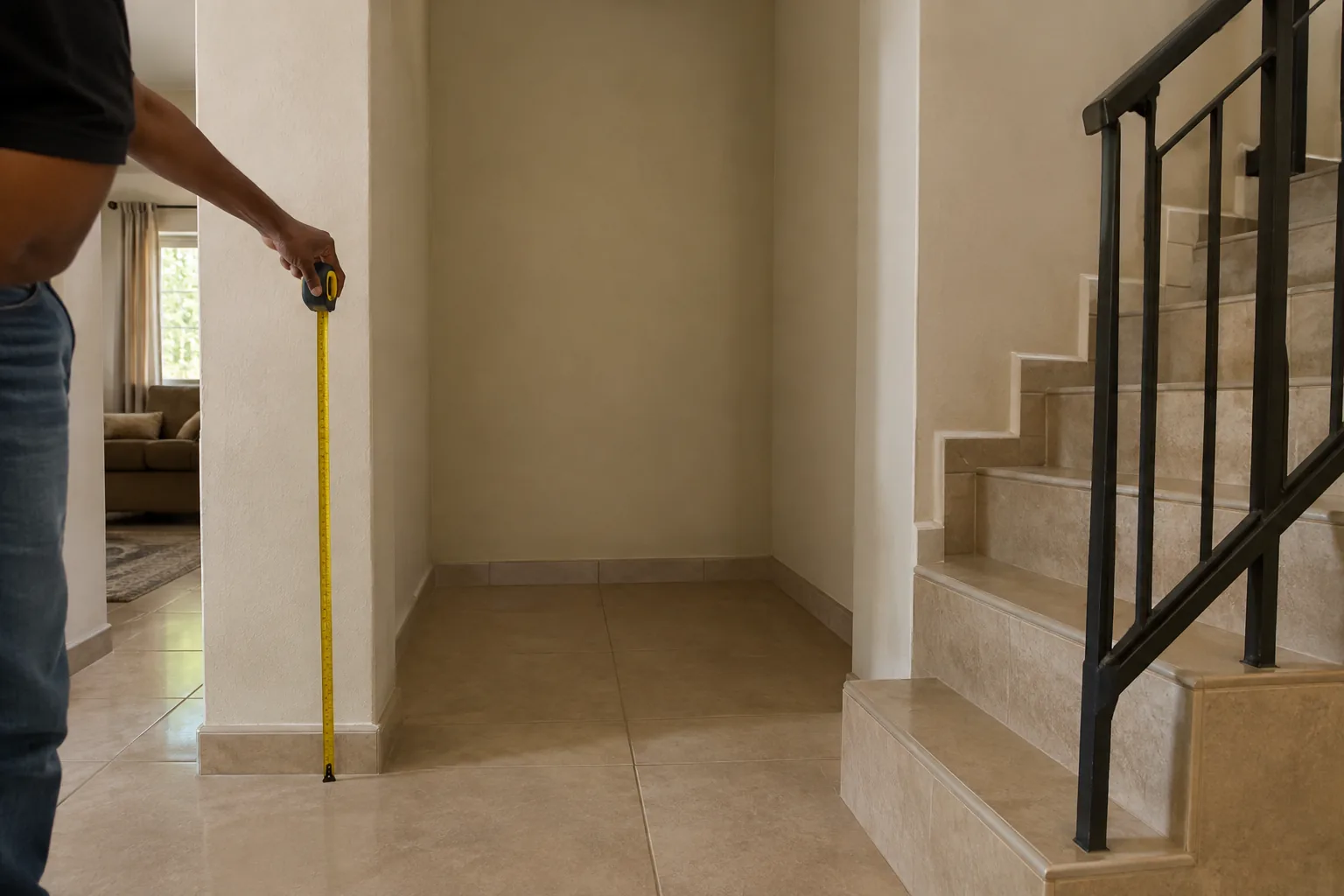
A home lift runs between the floors of a house for people who want to stay upstairs and downstairs without the stairs. Some are freestanding and need no shaft or pit, and others need a shaft. What fits depends on the floor space, the floors involved and any building work. A lift is priced after a look at the home.
What a home lift is, and who it suits
A home lift is a small lift installed inside or against a house. Capacity depends on the model. People often look at one for a parent who can no longer manage the stairs, for a wheelchair user, or in a house with two or three storeys where stairs have become the problem.
It is not the same as a stair lift. A stair lift is a chair on a rail along the staircase. A home lift is a car or platform that moves between floors on its own, so it needs floor space on each level. If you are weighing both, the stair lift page shows when the simpler option fits.
Shaftless and shafted lifts
Home lifts come in two broad kinds.
- Freestanding or shaftless. One South African supplier of these says its lifts need no shaft, pit room or motor room, run on a normal 220V plug, and can be installed in about two days. Another supplier says one of its models needs a floor space as small as 850 by 850 mm.
- Shafted or enclosed platform. One manufacturer says its enclosed platform lift needs a pit recessed 50 mm below the floor and a shaft, and it serves anything from two to six floors.
These are suppliers' own claims, and each model is different. What a particular lift needs is something to ask whoever quotes. See the checklist in can my home take a lift?.
Space, capacity and power
A few published figures show the range. They are examples, not a promise for your home.
| What | Published figure | Source |
|---|---|---|
| Two-person shaftless model, floor space | 0.8 square metres | South African supplier |
| Three-person shaftless model, floor space | 1.3 square metres, 250 kg | South African supplier |
| Maximum travel of one two-person model | 4.5 metres | Irish distributor of the same type |
| Enclosed platform lift, travel height | 1.6 to 15 metres, 2 to 6 floors | Manufacturer |
| Power | Normal 220V plug for the shaftless models; single-phase 230 V for the enclosed platform | Suppliers |
Floors, ceiling height and where the lift can sit are what decide whether a particular model fits. We don't publish a headroom figure, because we could not confirm one from an opened supplier page.
What it costs, and what moves it
We found no South African installer that publishes a home lift price. The figures online come from overseas exporters and forum posts, and they don't say what is included. What moves the price is the number of floors, the travel height, whether a shaft or pit is needed, building work, finishes and the type of lift. The home lift cost guide lists every figure we found with its source and date.
The rules that come with a lift
South African lift regulations apply to a lift in a private home. The department's own guidelines say so. They ask the owner to have the lift examined and maintained by a competent lift service provider, at least monthly or at longer intervals the manufacturer sets, and to have an inspection report from an inspection service provider at intervals not exceeding 24 months. Ask any installer who will do this and what it costs. The service and maintenance page explains it.
If you rent or live in a complex or estate, check your landlord, body corporate or estate rules before any work.
What to ask anyone who quotes
- What type of lift is it, and does it need a shaft or a pit?
- How much floor space and ceiling height does it need on each floor?
- What building work is needed, and is it in the price?
- Is the price for the equipment only, or installed?
- What happens in a power cut?
- Who will service and inspect it, and how often?
Questions people ask
How much floor space does a home lift need?
It depends on the model. One South African supplier publishes 0.8 square metres for a two-person shaftless lift and 1.3 for a three-person one. A lift that suits a wheelchair needs more. Ask for the exact footprint of the lift you are quoted.
Does a home lift need a shaft?
Some do and some don't. Freestanding shaftless models say they need no shaft, pit or motor room. Enclosed platform lifts need a shaft and a shallow pit. Ask which kind you are being quoted.
Will it work in load-shedding?
One supplier says a battery gives a safe descent to the lowest floor and that a small inverter can keep its lift running. That differs by model, so ask for the backup details of the lift quoted in writing.
Do I have to maintain a home lift?
The regulations say the owner has to have it examined and maintained by a competent lift service provider and inspected at intervals. See lift service and maintenance.
Is there tax relief for a home lift?
SARS has listed lifts for people with a physical disability as qualifying disability expenditure. Whether it applies to you depends on your situation and the current rules, so check current SARS guidance or ask a tax practitioner.
Sources for the figures and rules on this page
- A South African supplier: no shaft, pit or motor room, 220V plug, 0.8 square metres (two-person) and 1.3 square metres, 250 kg (three-person), installable in about two days (accessed 14 Nov 2026) lifta.co.za (opens in a new tab)
- Irish distributor: footprint 1047 by 810 mm, travel up to 4.5 metres, 230V, fits a space as small as 850 by 850 mm (accessed 14 Nov 2026) stiltzlifts.ie (opens in a new tab)
- Manufacturer: enclosed platform lift, travel 1.6 to 15 metres, 2 to 6 floors, pit recessed 50 mm, 230 V single phase (accessed 14 Nov 2026) aritco.com (opens in a new tab)
- Lift, Escalator and Passenger Conveyor Regulations 2009: scope, regulations 6 and 7, and the department's note on private residences (Government Gazette 39132, Notice R763, 28 Aug 2015) gov.za (opens in a new tab)
- SARS list of qualifying disability expenditure, effective 1 March 2020 (may have been updated since) sars.gov.za (opens in a new tab)