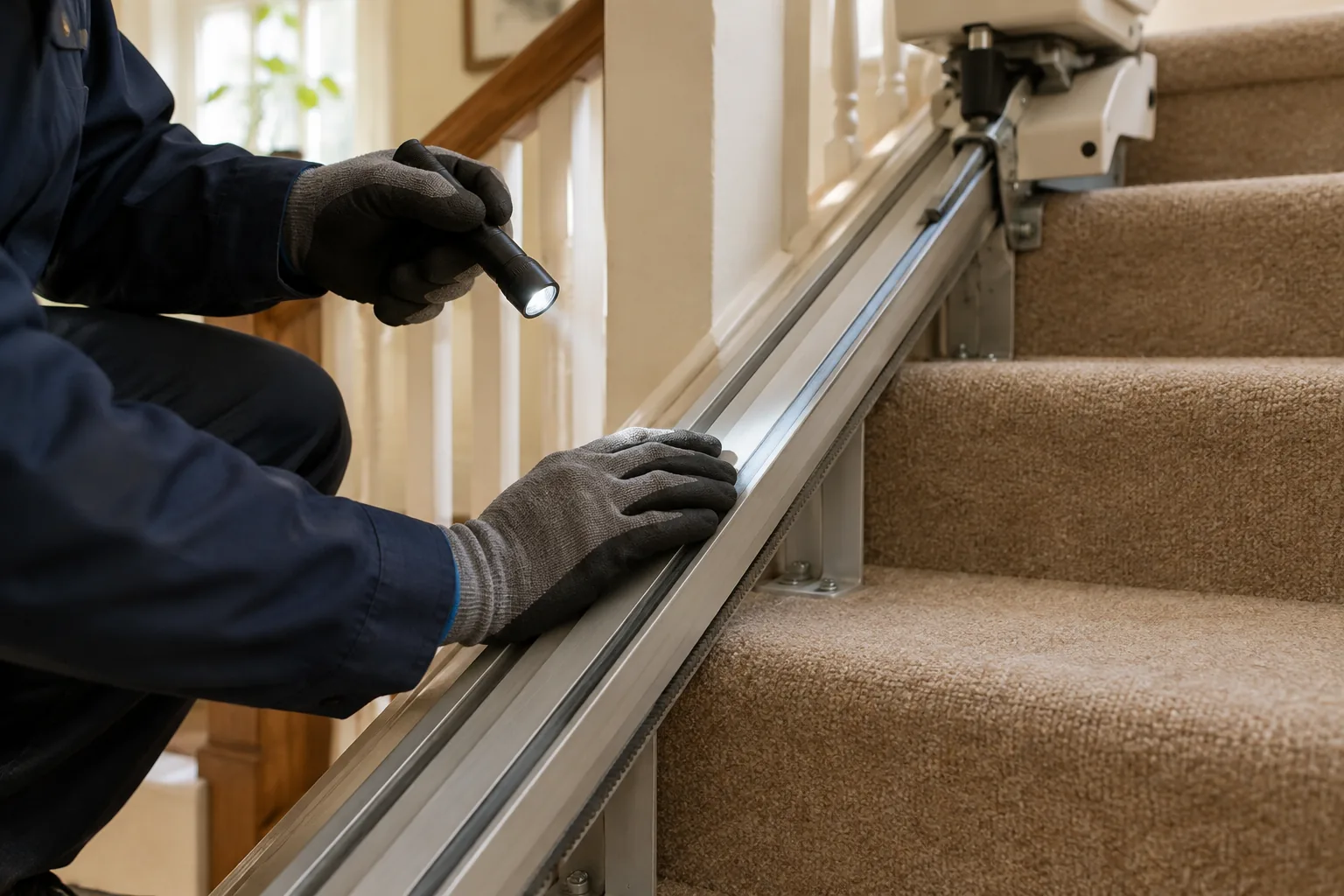
South African lift regulations apply to lifts in private homes, so a home lift needs regular maintenance and an inspection report. The regulations ask the owner to have the lift examined and maintained by a competent lift service provider, at least monthly or at longer intervals the manufacturer sets, and inspected at intervals not exceeding 24 months. Ask who will do it before you buy.
What the regulations say
The Department of Labour's guidelines to the Lift, Escalator and Passenger Conveyor Regulations, 2009 set out what applies. We repeat only what they say.
- Private homes are covered. The regulations apply to persons who have lifts on their premises, and the department's note says the scope also applies to lifts installed in a private residence.
- Registration. Before a lift is installed, a form has to be submitted to the provincial director, who allocates an official number, and before it is used there has to be a valid comprehensive report from an inspection service provider.
- The user is the owner. The department's note says the user of the lift is its owner. If you rent or live in a complex or estate, confirm in writing who carries these duties.
- Maintenance. The user must designate a competent lift service provider to examine and maintain the lift at least once a month, or at longer intervals the manufacturer sets. The regulation adds that an inspector may prescribe the intervals instead.
- Inspection. The lift has to be inspected and tested by an inspection service provider before first use, after any modification or failure, when the maintenance provider changes, and at intervals not exceeding 24 months, or shorter intervals if the user's own risk assessment says so.
- Stair lifting platforms. The department's note says maintenance requirements apply to lifts, escalators and stair lifting platforms among others. Whether a chair stair lift is treated the same way is something we could not settle from the sources we found.
The first four points above are the regulations as reproduced in the guideline document, and the notes are the department's own guidance. These are summaries, not legal advice. Ask whoever quotes what applies to your lift, and read the regulations themselves if it matters.
Who does the work
The regulations describe a competent lift service provider as a person who employs competent lift mechanics, or a self-employed competent lift mechanic, who contracts with the user to maintain, examine and test the lift. They describe an inspection service provider as a person who employs a lift inspector and is approved by an accrediting authority. These are the regulations' own terms, and we don't claim them for ourselves.
What to ask before you buy a lift
- Who will examine and maintain this lift, how often, and what does it cost?
- Who will arrange the inspection report, and what does it cost?
- What does the maintenance plan cover, and what is extra?
- What happens if it breaks? Who comes, and how do I reach them?
A lift that is cheap to buy and costly to look after can end up the more expensive choice. Ask for the running costs in writing.
Stair lifts
Suppliers say stair lifts run on rechargeable batteries and need little electrical work, which is a reason people buy them. The same questions apply: who services it, how often, and what is covered. If a lift is used again after a long time unused, ask for it to be checked before anyone rides it.
Questions people ask
Does a lift in a private home have to be maintained?
The regulations say they apply to lifts on premises and the department's note says that includes private residences. They ask the owner to have the lift examined and maintained by a competent lift service provider at least monthly or at longer intervals the manufacturer sets.
How often does it have to be inspected?
The regulations say at intervals not exceeding 24 months, or shorter ones if your own risk assessment says so, by an inspection service provider.
Who is responsible, me or the installer?
The department's note says the user is the owner of the lift. Ask your installer what they will do and what stays your responsibility.
Does this cover a chair stair lift?
We could not settle that from the sources we found. Ask whoever quotes.
Sources for the figures and rules on this page
- Lift, Escalator and Passenger Conveyor Regulations 2009 as reproduced in the Department of Labour's guidelines: regulation 2 (scope, and the note on private residences), regulation 3 note (user is the owner), regulation 6 (inspection at intervals not exceeding 24 months), regulation 7 (monthly maintenance, note on stair lifting platforms), regulation 1 (definitions) (Government Gazette 39132, Notice R763, 28 Aug 2015) gov.za (opens in a new tab)
- A South African supplier says stair lifts run on rechargeable batteries and need no major electrical work (accessed 14 Nov 2026) stairliftchair.co.za (opens in a new tab)